How to Tell If Your Bird’s Lighting Is Too Harsh

Lighting plays a bigger role in your bird’s comfort than most owners realize. While proper illumination helps birds stay active, social, and alert, light that’s too strong or poorly placed can do the opposite — leading to restlessness, squinting, or even fear of certain areas in the cage.
Let’s explore how to recognize and fix harsh lighting before it becomes a stress factor.
What Does “Harsh” Lighting Mean for Birds?
Harsh lighting can come from:
Overly bright lamps placed too close to the cage
Visible flicker from low-quality LEDs or fluorescent tubes
Direct glare that reflects off cage bars or shiny surfaces
Incorrect color temperature (too cold or blue-toned)
Common Signs of Lighting Discomfort
If your bird’s light is too intense or uneven, you might notice:
Frequent blinking or squinting
Fluffed feathers or head tucking soon after lights turn on
Staying in shadowed cage corners rather than perches
Sudden startle reactions when light intensity changes
Reduced vocalization or reluctance to play
These are not medical symptoms, but commonly observed behaviors among bird owners when light setups aren’t properly balanced.
How to Adjust Light Placement and Brightness
Start by observing how light interacts with your bird’s environment. Here’s how to fine-tune the setup:
Position lights above and slightly in front of the cage, not directly overhead.
Ensure the cage has both bright and shaded areas so your bird can self-regulate exposure.
Use lights with a neutral daylight color temperature (~6500K) to mimic natural conditions.
Avoid any visible flicker — birds are extremely sensitive to this.
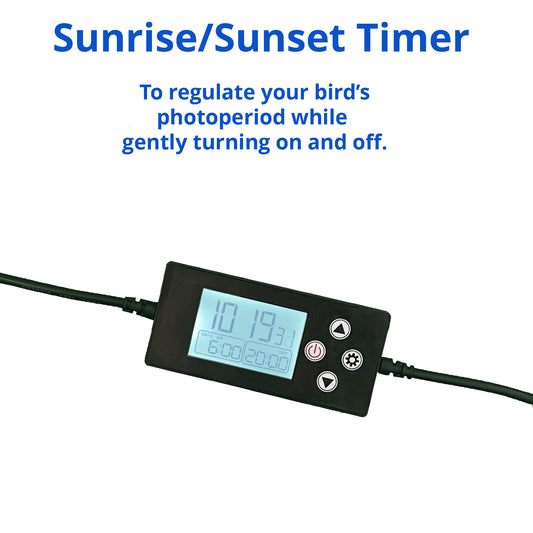
Maintain a consistent 10–12-hour day/night rhythm to avoid stress from irregular lighting changes.
Why HappyBird Lights Are Designed Differently
Many generic LED or “bird lamps” on the market prioritize brightness over comfort. HappyBird lights, however, were developed with avian vision research in mind. They are:
Flicker-free, preventing micro-stress caused by invisible pulsing
UVB-free, eliminating risks of eye irritation and overstimulation
6500K full-spectrum, replicating natural daylight balance
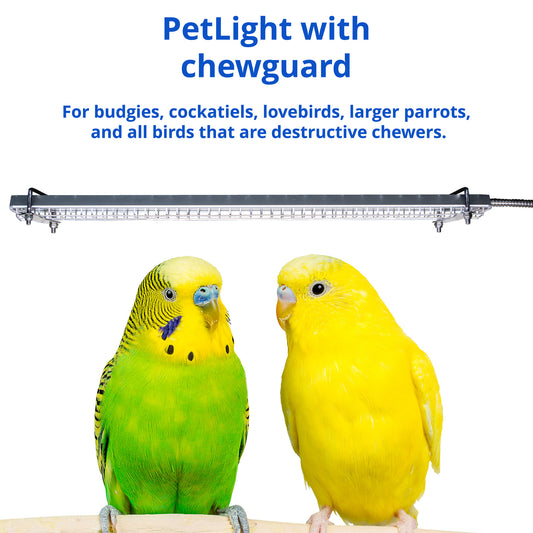
Cage-mounted & chew-safe, ensuring safe, stable positioning
By focusing on visual comfort and safety, HappyBird lighting supports calm, natural behavior — without overexposure.
Takeaway
If your bird is avoiding certain spots, closing its eyes often, or seems uneasy under light — the issue may not be your bird, but the lighting itself. Proper placement, balanced brightness, and a UVB-free, flicker-free light source can make all the difference in your bird’s mood and daily rhythm.