How Bright Should Bird Lights Be?

When choosing lighting for indoor birds, most owners focus on color temperature or UV levels — but brightness plays an equally important role in creating a comfortable and natural environment.
Too bright, and birds may avoid the light altogether.
Too dim, and they may become less active or struggle to maintain a clear day–night rhythm.
So how bright should bird lights be indoors?
Let’s break it down in a simple, bird-safe way.
What “Brightness” Means for Birds
Brightness is usually measured in:
lumens (total light output)
lux (light reaching a surface)
For birds, lux matters more because it determines how much usable light actually reaches the cage.
Why Brightness Matters
Birds rely on light levels to:
understand when the day begins
stay active and engaged
explore their environment
regulate daily behavior patterns
Indoor lighting that is too dim often results in birds:
resting more
vocalizing less
showing reduced interest in playing
These are commonly observed behaviors, not medical claims.
How Bright Should Bird Lighting Be Indoors?
For most indoor birds, owners and avian specialists commonly aim for:
✅ 300–500 lux at the top perch level for general daytime activity
This provides clear, comfortable illumination without overwhelming the bird.
For comparison:
dim living room: ~100 lux
cloudy outdoor day: ~1,000 lux
direct sunlight: ~30,000+ lux
Indoor birds don’t need outdoor sunlight levels — they need clarity and consistency.
Signs Lighting May Be Too Bright
Bird owners often notice:
squinting or blinking under the light
avoiding the top perch
choosing shaded cage areas
sudden startle reactions when looking up
These can suggest the light is either too intense or poorly positioned.
Signs Lighting May Be Too Dim
Common owner observations include:
reduced activity
quieter behavior
slower morning wake-up
staying in darker areas of the cage
Again, these reflect behavior, not medical concerns.
Placement Matters More Than Power
A light that’s technically “bright enough” can still feel harsh if:
it shines directly into the bird’s eyes
it creates glare off cage bars
the light source is too close
Ideal placement is:
✅ above and slightly in front of the cage
✅ with both bright and shaded areas available
This lets the bird choose its preferred exposure.
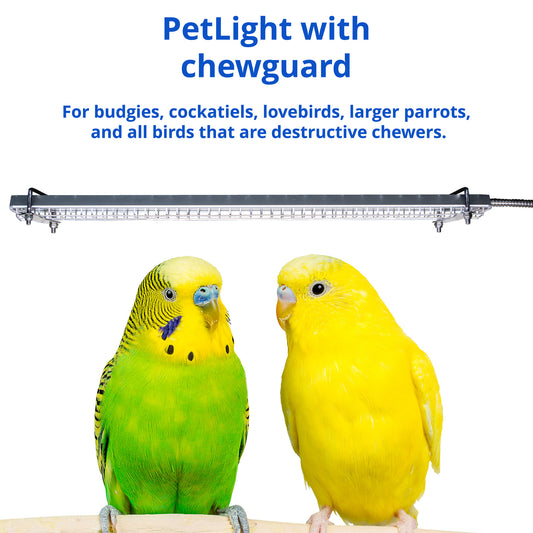
Why HappyBird Lights Are Designed for Balanced Brightness
Instead of maximizing brightness, HappyBird lights focus on:
even illumination across the cage
6500K daylight balance
flicker-free output
controlled light spread
cage-mounted positioning for ideal distance
This supports a natural visual environment without overwhelming intensity.
Takeaway
Indoor bird lighting doesn’t need to be extremely bright — it needs to be:
✅ clear
✅ consistent
✅ evenly distributed
✅ comfortable for the bird’s eyes
Aiming for 300–500 lux at perch height with a flicker-free, daylight-balanced light helps create a natural-feeling daytime environment indoors.