Can Birds Get Sunburn Indoors?

Bird owners often worry that their feathered companions aren’t getting enough sunlight indoors — or, conversely, that too much artificial light could harm them. But can birds actually get sunburn when living inside? And what’s the real role of UV light in keeping them healthy and comfortable?
Understanding Indoor UV Light for Birds
In nature, birds are exposed to the full spectrum of sunlight — including ultraviolet (UV) wavelengths. Indoors, however, most of that UV light is filtered out by glass windows. Ordinary window glass blocks nearly all UVB and a large portion of UVA rays.
That means your bird sitting by a sunny window may enjoy the brightness and warmth of daylight, but not its ultraviolet component.
This has led to a widespread belief that indoor birds need special UV lamps to make up for what they’re missing. But the reality is more nuanced.
The Truth About UVB and Birds
While UVB exposure helps wild birds synthesize vitamin D, the needs of indoor companion birds are different. Controlled studies and avian specialists have noted that excessive or poorly managed UVB can lead to:
Eye irritation or cloudiness
Behavioral stress from glare or flicker
Overstimulation and restlessness
For this reason, most modern avian lighting systems — including HappyBird lights — are designed without UVB. They provide a balanced, full-spectrum light (around 6500K color temperature) that mimics natural daylight without the harmful ultraviolet output.
This approach supports a healthy visual environment and aligns with how birds naturally perceive color and contrast — without the risks associated with UV exposure indoors.
Can Indoor Birds Get Sunburn?
No — sunburn requires UVB radiation, and since UVB doesn’t penetrate glass, indoor birds are effectively protected from it.
However, this also means they don’t benefit from it in the same way outdoor birds do. For most pet birds, that’s not a problem as long as their diet and lighting setup provide consistent cues for daily rhythm and activity.
If your bird spends time near a bright window, make sure:
The cage has shaded areas so your bird can choose where to sit
No lamp or direct sunbeam overheats the cage
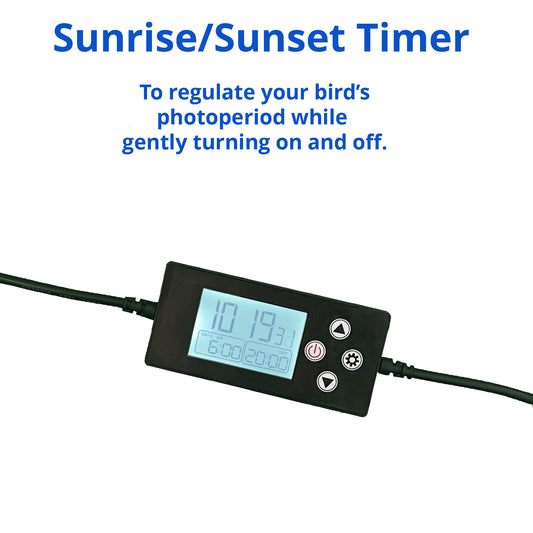
Lighting follows a consistent 10–12-hour day/night rhythm
Safe Lighting Options for Indoor Birds
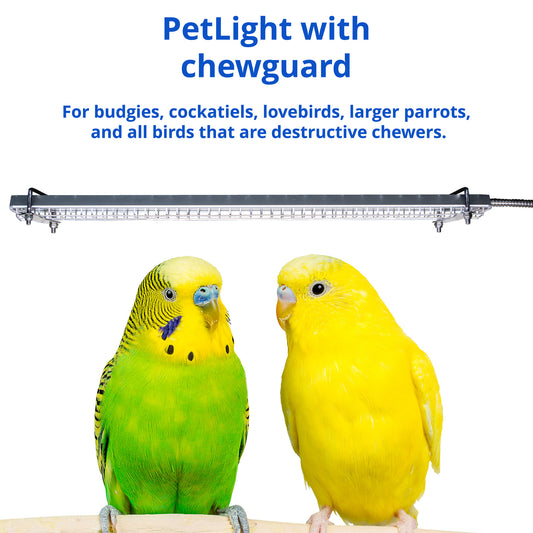
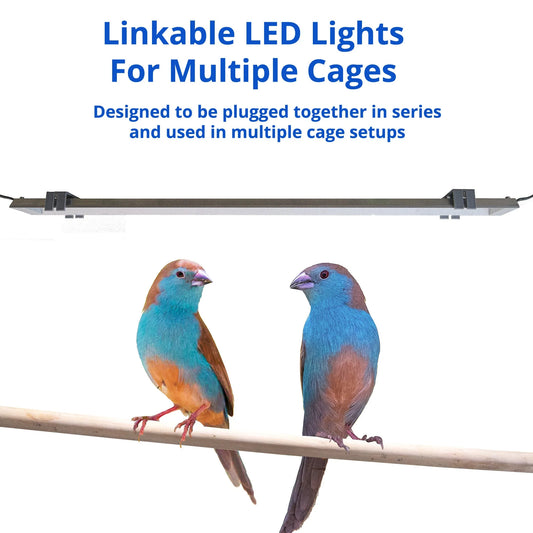
Modern flicker-free, cage-mounted LED systems like HappyBird lights are ideal for indoor settings:
UVB-free – eliminates risk of eye or skin irritation
Flicker-free – prevents micro-flicker invisible to humans but stressful for birds
6500K color temperature – matches natural daylight balance
Chew-safe & cage-mounted – designed for safety and durability
These factors make them suitable for all species, from budgies to parrots and canaries.
Takeaway
Birds can’t get sunburn indoors — but that doesn’t mean any light will do. The goal isn’t to imitate the sun’s UV rays but to replicate its rhythm and color balance safely. With the right setup, you can ensure your bird enjoys natural-feeling light every day — without the risks of UV exposure.